Powerplant: I want the project’s Ukrainian roots to be more visible

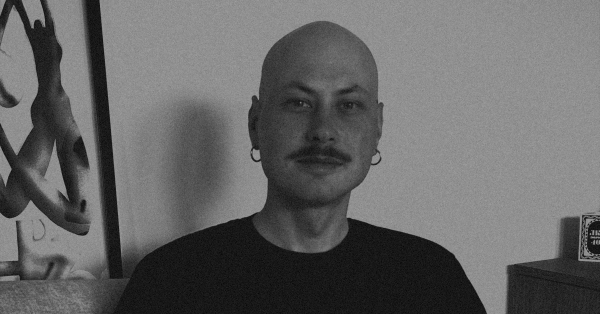
Powerplant has long outgrown Theo Zhykharyev’s bedroom. Today, it’s a full-on band with a live lineup, a KEXP session under their belt, and shout-outs from the Guardian, Stereogum, The Wire, and Pitchfork, plus tours across Australia, Japan, and the US. We caught up with Theo to chat about the journey and the brand-new record.
Originally from Zaporizhzhia, Ukraine, Theo Zhykharyev started Powerplant back in 2017 in his own room while studying in London. Since then, the project has evolved into a touring machine, hitting stages worldwide, including major European festivals like Denmark's Copenhell this June. Powerplant’s discography already boasts two albums and a string of EPs and singles, blurring the lines between punk rock, dungeon synth, black metal, and beyond.
We’re talking about the journey so far and the fresh LP, "Bridge of Sacrifice", dropping today, March 13th, via Theo’s own label, Arcane Dynamics.
Published in partnership with Monster Energy. Translated from Ukrainian.
The roots of Powerplant
I was born Zaporizhzhia. I finished school there and moved to London in 2014 to study filmmaking and kind of been here ever since.
Back in school, I was already into music, playing bass in a fun little band. That creative itch never went away; it just shifted. I wanted to do something on my own, in the comfort of my own space. Plus, for a long time, I didn't really have any friends here who were into making music. Then I discovered Ty Segall, John Dwyer from Osees, and Jay Reatard, guys who were making rock music solo, without a full band. That was the final push I needed. I realized I could just do it myself and started experimenting.

By 2017, I discovered modern punk on the internet. And well, what happened, happened. Looking back, there weren't any decision made, really. Things just happened and either worked or they didn't.
"The internet’s weirdest band"
It’s always strange to read a review that compares Powerplant to a band I’ve never even heard of, crazy to see those connections being made. How does that even happen? It's more fascinating when they don’t use specific names but describe us with certain adjectives. But it's hard to put things into words, I understand
Ed. Note: In the music press, Powerplant is most often described as "weird." To quote Louder Than War: "The internet’s weirdest band.".
Maybe it’s something weird in the Zaporizhzhia air (ed. Zaporizhzhia is an industrial city in the East of Ukraine) — I’ve huffed it too long, it's now in everything I do (laughs).
When the album "People in the Sun" came out in 2019, it suddenly got a lot of attention, and that was quite odd. Before that, I’d been doing everything more or less for myself, without many eyes on it, because nobody was really listening to my music.
With nearly 2.5 million streams on Spotify, the song "Dungen" from this album remains the artist’s most popular track
But then, other people enter the picture, and with them, expectations. It becomes harder to release music because you realize the dynamics have shifted. At one point, there was even a bit of self-sabotage involved — the feeling that it’s better to do something slightly different just to avoid making something "bad.".
There’s so much interesting music and so many cool things in this world. I still want to try new things and push myself out of my comfort zone. When you don't have enough experience in something, it keeps things interesting because it’s like you’re reinventing your own approach.
Karim, who plays bass, compared this multi-genre approach to a big cauldron of soup. You’re constantly adding things, pouring some out, but there’s always a bit left over from the "previous" soup, and it all just blends together over time.
A band of friends
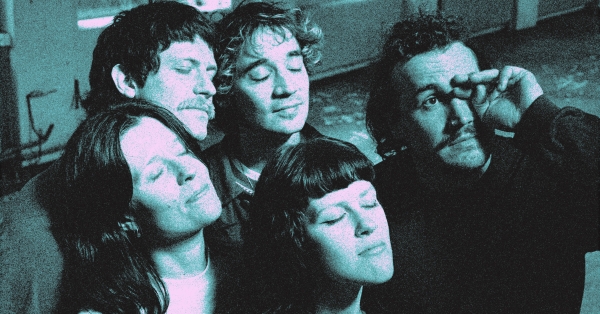
I write all the songs and make the music myself, and then when it comes to gigs, tours, and rehearsals, the four of us do it together.
We all come from slightly different musical backgrounds. Our drummer, Lloyd, is a fast hardcore guy. Karim, on bass, comes more from the world of emo-rock and emo post-hardcore. And Cam, who plays synths, produces hip-hop and electronic music. This creates an interesting effect because, for the recordings, I make something very "straight," like a "robot-computer" sound, and then these incredibly talented people turn it into a living, breathing thing.

We’re friends. So for me, it’s more of a friendship project, a live project. The fact that it’s presented as a band in a live setting is just down to the limits of the live music industry and commerce. I think people selling music need to convey information as simply as possible so listeners can quickly figure out if they like it or not. It’s like Nine Inch Nails, it’s basically Trent Reznor, but they’re still positioned as a band.
Born in Ukraine
In many media publications, Powerplant is briefly mentioned as "Ukrainian-born", but usually, the text doesn't emphasize the project's origins or the war in Ukraine much further.
When the band started touring a lot, there was a big emphasis on it being a "London band." I mean, it makes sense - people see four guys in a photo and don't stop to think about where each one is from and who does what - I also probably wouldn't! You just want to listen to some music not deep dive into band lore. But maybe I missed a step there from a PR perspective, but even when you do emphasize your Ukrainian roots, people still tend to forget.
One positive memory stands out — a show in Groningen, Netherlands. It was back in the summer of '22, first year of the russian full scale invasion, we had played on Ukrainian Independence Day, so the promoters found a local baker from back home and gave us a cake before the set. That was super nice!

I feel like unless you really aim to repeatedly get a point across and unless you don’t tell the people yourself, or put it in a press release — about where you are from and what that really means — they don't really pay attention. But even when you do, usually they don't!
When the "Grass" EP came out in ’23, I specifically put a lot of stuff about the war in the press release. But that information didn't make it into several major interviews that followed. Which is weird, because all music is super political, all art is super political, but some things still seem misunderstood or even uncomfortable for many people in the West.
Maybe it’s just a thing within the punk scene here? There’s a big general online understanding about wars and very well versed historic and cultural knowledge about all the ins and outs, and at the same time very little comprehension of other wars and understanding of living through it. But it is what it is, kinda frustrating.
In general, it's nuts for the band to be listened to anyway and anywhere, but it's most special when it reaches someone back home. It’s like a personal dream, something very important to me. Though I’m not sure if Powerplant is very well known there. Or maybe some people do listen but don’t know I’m Ukrainian. People buy merch occasionally, and sometimes someone writes a comment in Ukrainian. But everything in its own time. Powerplant is still a bit of a niche project.
Bridge of Sacrifice
The album "Bridge of Sacrifice" saw the light of day on March 13th. The record introduces black metal elements — a new frontier for Powerplant — yet maintains a predominantly gothic feel, as Theo kept his signature melodic vocal hooks and overall approach to songwriting.
I’ve been listening to black metal, death metal, and other extreme music for some time. But it never crossed my mind that I could also do that, not kvlt enough. Then I stumbled upon American label Grime Stone Records; the founder writes most of the music there. It’s garage black metal, kinda lo-fi! It felt like fun black metal and gave me a 'green light' to have a go at the genre! I didn't know you don’t have to go full-on goblin to do this music. I related to it, because Powerplant is self-aware. I take it seriously, but it doesn't have to be that serious.
So, I started experimenting a bit with minimal guitar chords. The song "Bridge of Sacrifice" was the first one written for the album, and it was proof it could be done. It’s got a pretty simple chorus. Just four chords, the kind everyone learns first on guitar, they’re so basic... like something you’d play while grilling sausages by a campfire (laughs). But I liked the combination. It can sound quite childish or humorous, but if you pour some personal meaning into it, the result becomes something special.
"It's sad sitting in a room by yourself all the time"
The album was mixed and mastered by Stanley Gravett at London’s Holy Mountain Studios, known for working with the likes of Idles, The Horrors, and High Vis.
I made the album on my own, except for the cello parts on two tracks. I also invited some friends to do backing vocals at the end of one song. Even though I programmed the drums on a computer, the album might sound more like a full band record. Stan helped me re-sample them to sound like a real kit and then tucked them back into the mix.
Maybe writing music all by yourself isn't the best way to go, but it is what it is. Over time, I realized that despite the urge to keep doing more and more, you just can't pull everything off alone. So, back in 2024, it was time to find someone to help me record vocals properly, and that’s how I met Stan. We recorded a few tracks that summer — not very successfully — but we hit it off and found common ground. Eventually, we became friends and continued working professionally, deciding to tackle this album together.
I tried my hand at mixing, but it’s such a complex, scientific endeavour that I feel like my window for learning it has already passed. I’d rather focus on other things. I’m really happy with how it turned out; I think the album sounds pretty cool. Plus, it was great to collaborate with another person and actually talk to someone — it gets lonely sitting in a room by yourself all the time.
The clay "Grandpa" від Walls.Press
I still curate the visuals for Powerplant, but lately, I’ve been more about sketching out rough ideas or doodles and handing them over to more talented hands.

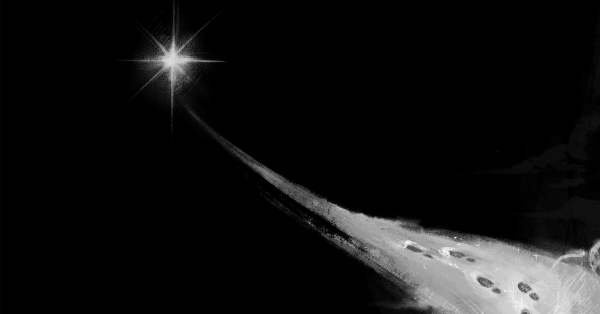
The cover for "Bridge of Sacrifice" marks my second collaboration with Anton from Walls.Press, where he actually sculpted a physical object out of clay. Anton did similar clay pieces for his hardcore band, Reminded, and I absolutely loved them. We came up with the composition together, and we’ve taken to calling the figure on the cover "Grandpa" — we’re constantly chatting about "Grandpa" (laughs). Anton is a true master of his craft, incredibly talented. His screen printing is probably the cleanest work I’ve seen out of the millions of t-shirts I’ve had printed ever. Plus, it was just great to create something with a mate again.
A music video for a can of beer
I’ve known Giulia Mucci for quite a while; we met on a film set. She lived in London for a bit before moving back to Milan. She’s always making these mini-films, drawing inspiration from low-budget old B-movies, the kind that are super simple plot-wise but try to grab your attention through other means.
In 2023, a production company gave Giulia some funding to create a portfolio piece. It perfectly coincided with our release that summer, and that’s how the video for "Grass" came to life.
For the new album, Theo worked with director Giulia Mucci again on the video for "The Fork"
This time, I pitched some songs from the album myself. I had a few ideas, especially for "The Fork" — horses, cool locations. We spent a long time looking for a budget but couldn’t find the cash, so, essentially, we made it for a can of beer. It turned out great because we shot it on 8mm film. 8mm is forgiving; it smooths over mistakes even if the production is super basic. Maybe that’s the way forward — creating things with like-minded people for next to no money.
The saddest album
"Bridge of Sacrifice" is vital for me and for the trajectory of the band because it cements Powerplant’s image as something diverse and multi-genre. It hints at what’s coming next, and while you can’t predict a specific outcome, the most important thing is that it’ll still sound like Powerplant.
There was a lot of serious prep this time, a lot of deep thought and conscious decisions. My last full vocal album was back in 2019, and looking back, it feels a bit "juvenile", too simply made. With "Bridge of Sacrifice", I really tried to sound professional so that I won’t feel embarrassed by it in two or three years.

All my music is a reworking of personal experience. It’s helpful to turn that horror into something tangible. That’s why "Bridge of Sacrifice" is my most expressive, saddest, and angriest album yet, even if it might sound 'fun' on the surface. This LP was written and recorded over the last four years, so while all the darkness and sadness is heavily veiled, for me, that’s exactly where its meaning and context lie.
Ed. Note: Theo’s family and friends have remained in Zaporizhzhia throughout this time. He stays in close contact with them, and the emotions regarding their safety weigh heavily on him.
Touring the World
In 2023, Powerplant toured the US, followed by two short tours across Japan and Australia in 2025. The band also regularly plays shows across various European cities.
It’s wild to see the band’s success — the listeners, the fans, the genuine interest in Powerplant from different corners of the globe. I still don’t quite understand it, and I’m never quite sure how to react when people tell me this music means something really important to them. But it allows me to see the world, both the good and the bad. It’s great because it gives you a better perspective on what you actually have.
I’d always dreamed of visiting Japan, and that finally happened last year. It was a total culture shock — the cultural system and infrastructure are built so differently there. Australia, on the other hand, felt like one massive field. It was fascinating to drive through massive parts of it and realize there’s absolutely nothing and no one around. The entire country has a population of about 25 million, while the Greater Tokyo Area alone has nearly double that.
These trips feel like a weird dream: there are plenty of familiar elements from your own head, but they’re glued together into a very specific puzzle.
I plan our tours and prepare for them for months, then everything happens so fast. A week or two later, it just exists as a memory in my head, and I struggle to realize if it all actually happened. But it’s nice to know these super-niche communities exist all over the world and that I’ve had the chance to connect with them somehow.
KEXP
In September 2024 Powerplant was invited to perform at the legendary radio station KEXP.
When I got the email from KEXP, it felt like a pipe dream from my 17-year-old self finally coming true — tears in my eyes! Honestly, just having that formal invitation was enough for me, even without the session itself.
DJ Jenn from the "Sonic Reducer" show reached out to us; they lean more towards alt-rock and punk. Depending on their seniority at the station, DJs get a certain number of slots to invite bands, and I think Jenn only had one such slot for the entire year. It’s incredibly flattering that she chose Powerplant!
They gave us a tour of the station, and I was blown away. Online, you usually only see that one small room with the fairy lights, but it’s actually a massive industrial building with a huge open-plan office, several recording booths, and a cafe. The giant server room was particularly impressive.
The live room itself is huge now, packed with so much high-end gear it looks like a spaceship. But the highlight was the team. They’re the loveliest, most down-to-earth, and genuine people. In fact, the thing that strikes me most during my travels is how much human sincerity there is out there, especially in these niche, alternative communities.
Though it feels strange to look back on it now. Over time, moments like these turn into a sort of fairytale or folklore in my head. Maybe it happened, maybe it didn't. Who knows what the truth is? (laughs)
A pretty bad business
Prices for everything are skyrocketing. It’s having a real knock-on effect on how people buy t-shirts or go to gigs. You really feel it on tour. Every promoter and tour manager we’ve worked with has noted a bit of a lull because people are forced to save money. Then there are the damn customs duties — first Brexit, then Trump’s tariff madness. It makes life quite difficult for everyone.

At the end of the day, Powerplant is a pretty bad business. Releasing a Dungeon Synth album followed by a Black Metal one when you’re supposed to be a punk band... those aren't exactly "smart" business moves. This weird project is far more about the idea than any financial incentive. For me, the most interesting and fun part is simply that it exists. And that some people get to hear it.
You could mope about it, but what’s the point? You have to keep doing things and moving forward, and we’ll see where it leads. Besides, with my parents and friends in Zaporizhzhia or Kyiv, me sitting here being sad just feels wrong.
Summer plans
Festival invites feel special because these events are long-standing institutions. I have a lot of respect for them, and it’s great to be part of a yearly cultural tradition.
The Copenhell show coincided with the release of the new album, which is already more metal than punk. We were only there for a day, but the band I was most excited to see this year was Babymetal. Honestly, seeing my band’s name on a poster — even in tiny print — next to musical giants is surreal. It looks like Photoshop to me!
I dream of playing a show in Ukraine, and it’s going to happen, 100%!
Published in partnership with Monster Energy.

Powerplant online: Linktree
Фото надані виконавцем